
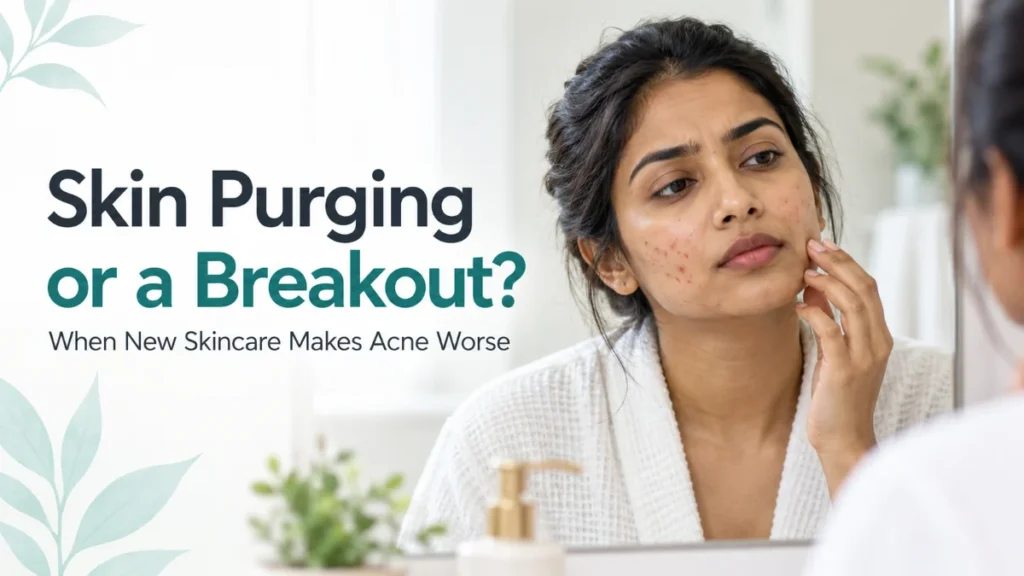
New spots after starting skincare are not automatically skin purging. Some acne medicines can cause temporary early worsening, while other products may contribute to breakouts or irritate your skin. Burning, an itchy rash, swelling or blistering should not be dismissed as a sign that a product is working. The ingredient, timing and symptoms matter, and a dermatologist may need to assess the reaction.
What does skin purging mean?
People use the term “purging” to describe an initial increase in spots after beginning certain acne treatments. It is not a diagnosis you can confirm from a photograph or the number of days since you opened a product. Ordinary acne can fluctuate, and irritation can occur at the same time as acne.
The label for an adapalene and benzoyl peroxide acne gel describes possible early worsening, but separately lists irritation and instructions about when to seek help. That distinction matters: an expected possibility with one medicine does not make every reaction to skincare harmless. Read the treatment-label information on DailyMed.
Skin purging vs breakout vs irritation: what is the difference?
This comparison can help you describe a problem at an appointment. It cannot establish which condition you have.
| Possibility | What to consider | Important limit |
|---|---|---|
| Initial treatment-related worsening | Did you start an acne medicine whose instructions describe this possibility? | Timing alone does not confirm purging. |
| Acne breakout | Have your products, routine or existing acne changed? | A new product is not necessarily the cause. |
| Irritation or contact dermatitis | Are there symptoms such as itching, burning, cracking or a rash? | Symptoms need assessment, particularly if severe or persistent. |
Can every new skincare product cause purging?
No. Do not assume that a cleanser, moisturiser or sunscreen needs to cause spots before it can suit your skin. The relevant question is what the product contains and what its instructions say. A claim that skin is “detoxing” is not enough to explain a worsening reaction.
Using several new products together makes the sequence harder to understand. The American Academy of Dermatology warns that repeatedly switching acne treatments can irritate skin and worsen breakouts. Its advice also includes choosing products labelled non-comedogenic. That label is a useful starting point, not a guarantee of individual compatibility. See the AAD’s skin-care habits that can worsen acne.
How long should you wait for acne treatment to work?
Improvement is different from tolerating a reaction. The AAD explains that an acne treatment plan often needs at least six to eight weeks before fewer breakouts become noticeable. This is not a universal “purging period” and does not mean you should ignore significant irritation for that long.
Follow the instructions for your own treatment. If a prescription is causing problems, contact the prescribing clinician for guidance about whether to pause or adjust it. Do not increase the amount or add exfoliating products to try to speed up the result. Read the AAD’s acne diagnosis and treatment guidance.
Which symptoms should not be ignored?
Contact dermatitis can involve dryness, itching, burning, stinging, cracking or blisters. Seek prompt medical advice for a severe reaction, rapidly worsening symptoms, discharge, increasing pain or feeling unwell. These can require more than a change in skincare. The NHS describes contact dermatitis symptoms and signs of infection.
For an over-the-counter product that appears to be irritating your skin, stop using it and ask for advice rather than repeatedly testing it on an already sore area. Follow any specific safety instructions supplied with a medicine. Avoid scrubbing or picking at the affected skin.
What should you bring to a dermatologist?
- The product packaging or a clear photograph of the full ingredient list.
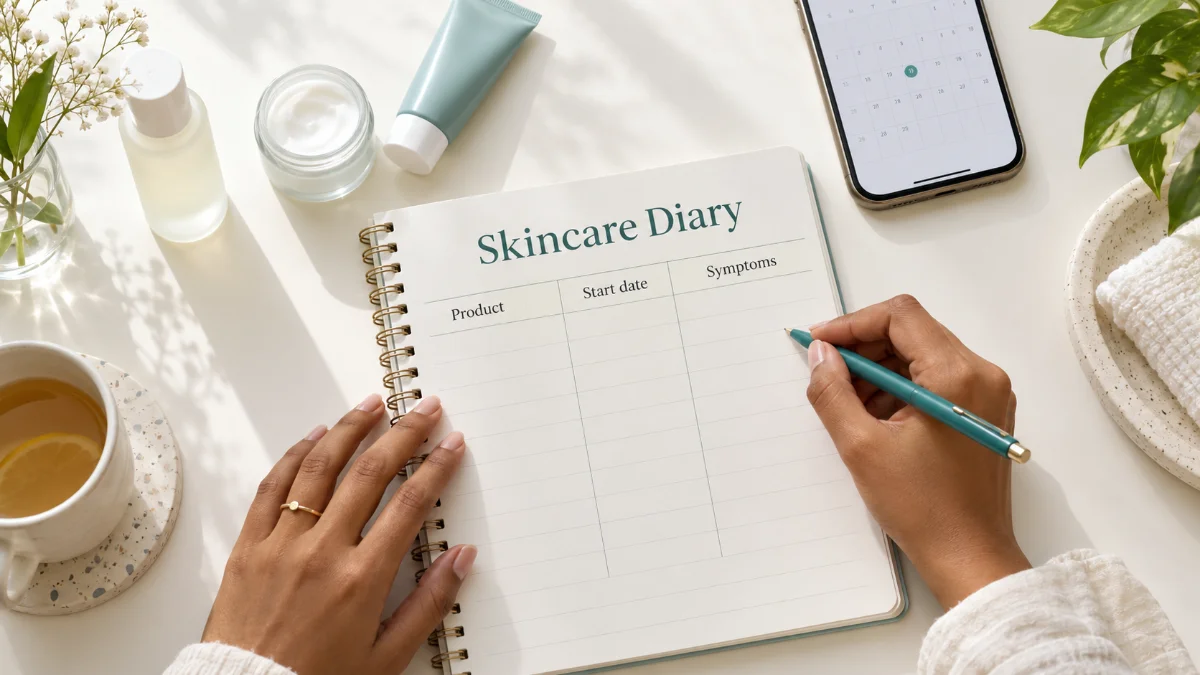
- The date you started each product and how often you used it.
- Details of prescription medicines, exfoliants and other active products used alongside it.
- Photographs showing how the symptoms changed, if available.
- A description of itching, burning, pain or other symptoms, rather than spots alone.
For the broader reasons acne persists, read why adult acne keeps returning. For individual assessment in Kochi, explore acne care at Skinessence or contact the clinic.
FAQs
Does purging mean my skincare is working?
No. Worsening spots alone do not prove benefit. Look at the actual treatment instructions and discuss an unexpected or troublesome reaction with a clinician.
Can purging and irritation happen together?
Acne and irritation can coexist. A product’s potential to cause initial worsening does not rule out a separate skin reaction.
Should I keep using a product if my skin burns?
Do not treat burning as proof of progress. Follow the product’s safety instructions and seek advice, especially if symptoms persist, worsen or accompany a rash.
