
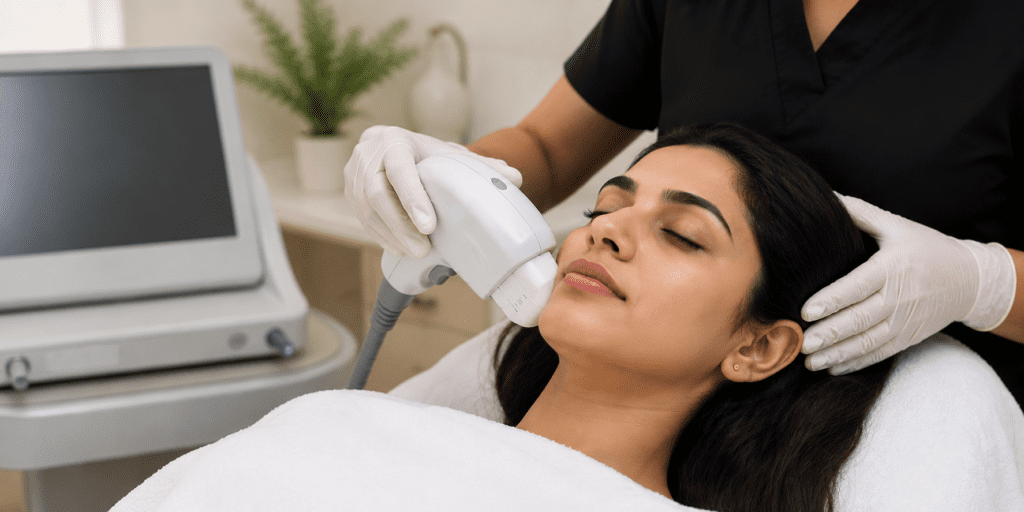
As we age, our skin naturally loses collagen and elastin, leading to sagging skin, fine lines, and reduced facial definition. Fortunately, advances in aesthetic dermatology have made it possible to improve skin firmness without surgery.
Two of the most popular non-surgical skin tightening treatments are HIFU (High-Intensity Focused Ultrasound) and RF (Radiofrequency) Skin Tightening.
Patients frequently ask:
"Which is better—HIFU or RF Skin Tightening?"
The answer depends on your skin condition, degree of skin laxity, treatment goals, and your dermatologist's assessment. While both treatments stimulate collagen production, they work differently and are often recommended for different concerns.
At Skinessence, Kochi, every patient receives a personalized skin evaluation before any treatment is recommended.
What Is HIFU?
HIFU (High-Intensity Focused Ultrasound) is a non-invasive treatment that delivers focused ultrasound energy to the deeper structural layers of the skin.
It is commonly recommended for:
- Mild to moderate skin laxity
- Jawline definition
- Double chin appearance
- Neck tightening
- Facial contouring
- Non-surgical facelift
HIFU stimulates collagen production deep within the skin, allowing gradual skin tightening over the following weeks and months
What Is RF Skin Tightening?
Radiofrequency (RF) Skin Tightening uses controlled radiofrequency energy to gently heat the deeper layers of the skin.
This controlled heating stimulates collagen remodeling and may help improve:
- Mild skin laxity
- Fine lines
- Skin texture
- Skin firmness
- Overall skin rejuvenation
RF treatments are commonly chosen by patients looking for gradual skin tightening with minimal downtime.
HIFU vs RF Skin Tightening: Key Differences
How Do These Treatments Work?
Both HIFU and RF stimulate the body's natural collagen production.
As collagen remodels over time, patients may notice improvements in:
- Skin firmness
- Facial contours
- Skin elasticity
- Overall skin quality
Although both treatments share the same goal, they reach different skin layers using different energy sources.
Which Treatment Is Better for Sagging Skin?
The best treatment depends on the severity of skin laxity.
HIFU may be recommended for:
- Mild to moderate facial sagging
- Jawline definition
- Double chin appearance
- Neck tightening
- Non-surgical lifting
RF Skin Tightening may be recommended for:
- Mild skin laxity
- Fine lines
- Skin texture improvement
- Skin rejuvenation
- Maintenance treatments
A dermatologist will recommend the most appropriate option after evaluating your skin.
Can HIFU and RF Be Combined?
Yes.
In selected cases, dermatologists may recommend combining HIFU with RF Skin Tightening as part of a customized anti-ageing treatment plan.
Combination therapy may help address different skin layers while supporting overall collagen production.
The exact treatment schedule depends on your individual skin condition.
Who Is a Good Candidate?
You may benefit from HIFU or RF Skin Tightening if you:
- Notice mild to moderate skin laxity
- Want to improve facial contours
- Prefer non-surgical treatment
- Have realistic expectations
- Wish to improve skin firmness
Suitability is determined after a professional consultation.
How Many Sessions Are Needed?
The number of sessions varies depending on:
- Skin condition
- Degree of laxity
- Treatment selected
- Age
- Individual response
Your dermatologist will recommend a personalized treatment plan.
How Can You Maintain Your Results?
To support healthy skin after treatment:
- Wear sunscreen daily
- Follow a dermatologist-approved skincare routine
- Stay hydrated
- Eat a balanced diet
- Avoid smoking
- Schedule maintenance treatments if recommended
Healthy lifestyle habits contribute to long-term skin health.
Why Choose Skinessence for Skin Tightening Treatments in Kochi?
At Skinessence, treatment recommendations are based on a comprehensive skin assessment rather than a one-size-fits-all approach.
Our dermatologists evaluate:
- Degree of skin laxity
- Skin quality
- Facial anatomy
- Medical history
- Lifestyle factors
- Treatment expectations
This allows us to recommend the treatment that best suits your individual needs.