
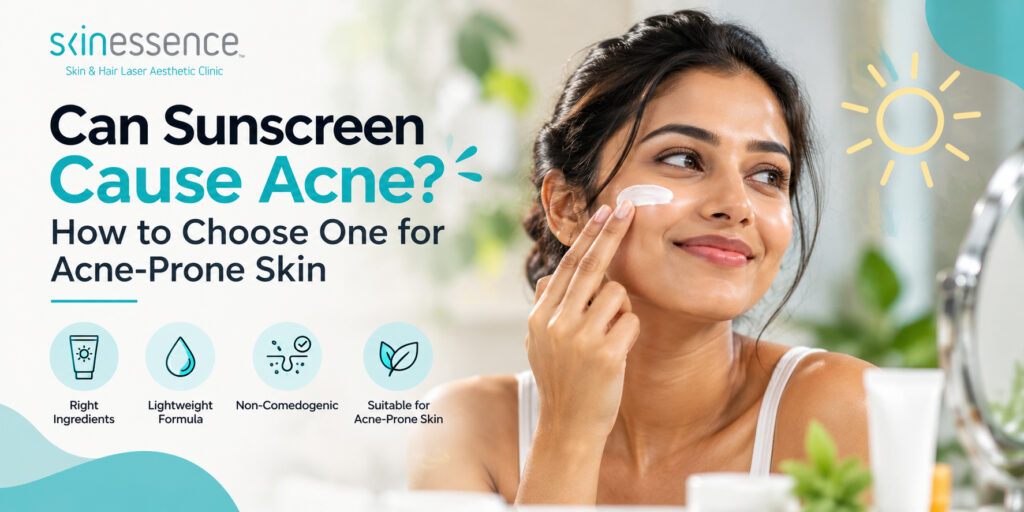
Some sunscreens may contribute to breakouts, but new spots after starting a product do not automatically mean sunscreen is the cause. Choose a formula labelled non-comedogenic or oil-free, keep the rest of your routine simple, and pay attention to whether you are seeing pimples or an itchy, irritated rash. You can change an unsuitable product without giving up sun protection.
Why might breakouts appear after a new sunscreen?
Sunscreen is one part of a routine that may also include moisturiser, makeup, hair products and acne treatments. Introducing several products together makes it difficult to identify which one your skin dislikes. The American Academy of Dermatology recommends acne-friendly products, including sunscreen, that are labelled non-comedogenic or “won’t clog pores”. These labels are a useful starting point, rather than a promise that every formula will suit you.If breakouts began after a change, note the product name, when you started using it and what else changed. Repeatedly replacing your whole routine can add irritation and make the pattern harder to interpret. Read the AAD’s advice on product choices and acne habits.Is it acne, or could it be irritation?
Itching, burning, dryness, cracking or blistering can suggest a skin reaction rather than ordinary acne. Contact dermatitis may appear after exposure to an irritating substance or an allergen. Appearance alone is not enough to diagnose the cause, and a rash should not be dismissed as “purging”.Stop using a product that appears to cause irritation and seek advice if symptoms are severe, persistent or keep returning. Bring its packaging or ingredient list to your appointment. A dermatologist can assess the reaction and decide whether further investigation is appropriate. The NHS describes symptoms that can occur with contact dermatitis.How to choose sunscreen for acne-prone skin
- Keep protection first: look for SPF 30 or higher, broad-spectrum protection and water resistance.
- Check the product description: non-comedogenic or oil-free options can help narrow the choice.
- Consider comfort: a finish you can wear consistently matters more than choosing a product only because it is popular.
- Consider sensitivity separately: a product suitable for oily skin may still irritate sensitive skin. Ask for guidance if products repeatedly sting or cause a rash.