
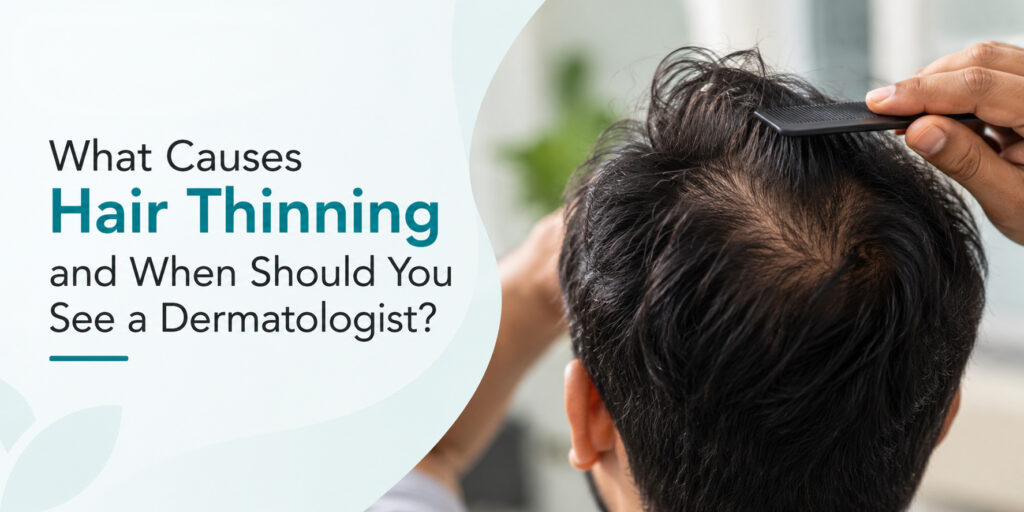
Noticing more hair on your pillow, comb, or shower drain can be concerning. Hair thinning can happen for many reasons, and identifying the underlying cause is more useful than treating hair fall as a single condition.
Some hair shedding is temporary and may improve once the underlying trigger resolves. Other types of hair loss, including hereditary hair loss, may continue without appropriate management. A dermatologist can help distinguish between different causes and determine whether treatment is needed.
What Is the Difference Between Hair Shedding and Hair Thinning?
Hair shedding and hair thinning are related but not necessarily the same.It is normal to lose some hair every day. However, noticeable changes in hair density, a widening part, a receding hairline, a thinner ponytail, or gradually increasing scalp visibility may indicate hair thinning.
Excessive shedding can also occur after certain physical or emotional stressors. This type of shedding may develop several months after an illness, high fever, surgery, significant weight loss, childbirth, or another major stressor.
Understanding whether you are experiencing temporary excessive shedding or progressive hair loss is an important first step.
What Causes Hair Thinning?
Hair thinning has many possible causes. Some are temporary, while others require ongoing management.
Hereditary Hair Loss
Genetic or hereditary hair loss is one of the most common causes of progressive thinning. In men, it may appear as a receding hairline or thinning at the crown. In women, widening of the part or general reduction in hair density may be an early sign.
Stress, Illness or Major Physical Changes
Significant physical or emotional stress can trigger increased hair shedding. This may occur after an illness, high fever, surgery, childbirth, or substantial weight loss.
Nutritional Deficiencies
Inadequate levels of certain nutrients, including iron, protein or zinc, can contribute to noticeable hair loss. However, supplements should not be taken simply because hair is thinning. The underlying cause should first be evaluated.
Hormonal or Medical Conditions
Conditions affecting hormones or general health can sometimes contribute to hair thinning. Thyroid disease and some hormonal imbalances are examples.
Alopecia Areata
Alopecia areata is an autoimmune condition that can cause hair loss, often appearing as distinct patches. It requires a different approach from common hereditary hair thinning.
Scalp Conditions and Infections
Some scalp conditions and infections can cause inflammation, scaling and hair loss. Treating the underlying scalp problem may be necessary to prevent further hair loss.
Hair Care and Hairstyles
Repeatedly pulling the hair tightly or using damaging hair-care practices can contribute to hair loss. Persistent traction can cause permanent hair loss if the follicles become damaged.
Certain Medications or Treatments
Some medications and medical treatments can cause hair loss as a side effect. If you suspect that a medication is contributing to your hair loss, speak with the doctor who prescribed it rather than stopping the medication on your own.
How Can You Recognise Early Hair Thinning?
Hair thinning can develop gradually, making the early signs easy to overlook.
Look for changes such as:
- A widening part
- A thinner ponytail
- Increasing visibility of the scalp
- Gradual reduction in overall hair density
- A receding hairline
- A slowly enlarging bald spot
- More noticeable thinning around the crown
These changes do not necessarily identify the cause by themselves, but they can indicate that a professional assessment may be useful.
When Should You See a Dermatologist for Hair Thinning?
Consider seeing a dermatologist if:
- Your hair is becoming progressively thinner.
- You notice a widening part or receding hairline.
- Hair loss develops suddenly.
- You develop one or more bald patches.
- Hair thinning occurs together with scalp redness, scaling, itching or pain.
- You notice significant hair loss after an illness or major physical change.
- Hair shedding continues for an extended period.
- You are unsure whether you are experiencing shedding, breakage or actual hair loss.
- Hair loss is causing you concern or affecting your wellbeing.
Early evaluation can be useful because treatment and prevention are often more effective when the underlying cause is identified sooner.
How Does a Dermatologist Diagnose Hair Loss?
A dermatologist begins by understanding your history and examining your hair and scalp.
The assessment may include questions about:
- When the thinning started
- Whether it developed gradually or suddenly
- Recent illness or major stress
- Family history of hair loss
- Medications
- Hair-care practices
- Other symptoms
- Previous treatments
The dermatologist may examine the scalp and assess the hair itself. Depending on the suspected cause, additional investigations such as blood tests or, in selected cases, a scalp biopsy may be considered.
This step is important because different causes of hair loss require different approaches.
Can Hair Thinning Be Reversed?
Whether hair thinning can be reversed depends on its cause.Some temporary forms of excessive shedding can improve when the underlying trigger resolves.
For example, hair may gradually regain fullness after recovery from certain illnesses or stressors.Other conditions may require treatment to slow further hair loss or support regrowth.
Hereditary hair loss, for example, tends to be progressive without appropriate management.This is why diagnosing the cause should come before choosing a treatment.
What Should You Avoid When Your Hair Is Thinning?
When hair is already fragile, avoid practices that can increase breakage or traction.Be careful with:
- Very tight hairstyles
- Excessive heat styling
- Aggressive brushing or combing
- Repeated chemical processing
- Pulling or picking at the hair
- Unnecessary supplements marketed specifically for hair growth
Hair-care changes can help reduce avoidable damage, but they cannot treat every medical cause of hair loss.